|
79Score
Getting your Trinity Audio player ready...
|
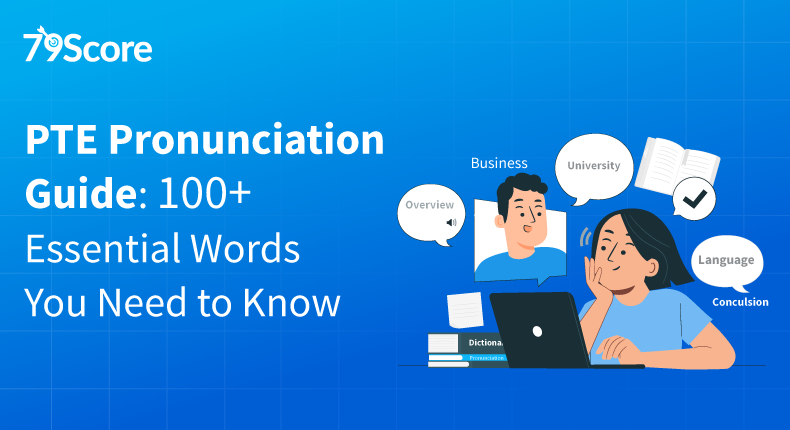
Pronunciation plays a crucial role in increasing or decreasing the score, especially in the Speaking and Listening sections of PTE exam. To sound fluent and understandable to AI evaluators, good pronunciation is necessary. However, it can sometimes be challenging for non-native English speakers to pronounce correctly. But do not worry —here is a PTE pronunciation guide with a list of 100+ most commonly repeated words to help you crack the Speaking and Listening sections easily.
Let’s start with understanding common challenges and effective PTE pronunciation tips to overcome these hurdles.
What is Pronunciation in PTE?
Pronunciation in PTE refers to how clearly and accurately you speak English during the Speaking section of the exam. It is one of the key scoring criteria and is evaluated by Pearson’s AI-powered scoring system. The goal is not to sound like a native speaker but to ensure that your speech is easy to understand.
When assessing pronunciation, the AI looks at several aspects of your speech, including:
- Clarity – Are your words easy to understand?
- Word and sentence stress – Do you emphasize the right syllables and important words?
- Intonation and rhythm – Does your speech sound natural and fluent?
- Pronunciation of individual sounds – Are vowels and consonants pronounced correctly?
Common Challenges in PTE Pronunciation
Stressing on the Wrong Syllables
Some of the words have specific syllables that need to be stressed according to the context of the sentence. For example, “present.”
- Stressing on first syllable as a noun:
o PREsent-– She gave me a birthday PREsent
- Stressing on Second syllable as a verb:
o preSENT- Let me preSENT my idea.
Confusion of Vowel Sounds:
- There are so many words that might look similar but have different vowel sounds (/ɪ/ vs /iː/). For example, “ship” vs. “Sheep”.
Missing Link Sounds
- Often native English speakers link words together when they speak; for example, instead of “I am eating,” you’ll hear “I’m eating.” When you miss these linking words, your speech sounds unnatural or broken.
Pronouncing Difficult Words
In the PTE exam, you will encounter less common words like hierarchy, phenomenon, entrepreneur, etc. Some of these words you might see or hear for the first time.
But these challenges can be reduced by below mentioned preparation tips and regularly practicing speaking and listening sections on 79Score’s section-wise test.

Not sure where you stand? Take a free PTE mock and find out instantly


- Get a complete performance breakdown instantly
- Access 30,000+ Free Question Wise Practice
How to Improve Your PTE Pronunciation
Below are the tips that will boost your pronunciation & oral fluency in PTE exam
Repeat What You Hear:
One of the best way to enhance pronunciation is to listen carefully. Try to imitate how English native speakers speak. Hear, YouTube videos, TED Talks, or even PTE sample recordings of various task on 79Score and understand where you are lacking. Pay attention to how they stress words, their rhythm, and their intonation.
Break Down Difficult Words
Try to break down a difficult word into smaller parts or syllables. Practice saying each part slowly, then put it together smoothly. For example, “entrepreneur” can be broken into en-tre-pre-neur.
Record Yourself
To evaluate where you are wrong, record yourself on your phone or any other device. This will help you hear mistakes you might not notice while speaking. You can also compare your recording with native speakers to find areas to improve.
Use Online Pronunciation Tools
Apps like Forvo, ELSA Speak, or even Google’s pronunciation feature are great for hearing correct pronunciations again and again. These tools often provide phonetic spelling and allow you to hear words spoken by multiple native speakers.
PTE Pronunciation List – 100+ Most Repeated Word
Adjectives
| Word | IPA | Pronunciation Tip |
| Accessible | /əkˈsesəbl/ | Say “ak-SESS-uh-bul” |
| Ambiguous | /æmˈbɪɡjuəs/ | Say “am-BIG-yoo-us” |
| Authentic | /ɔːˈθentɪk/ | Say “aw-THEN-tik” |
| Cumulative | /ˈkjuːmjələtɪv/ | Say “KYOO-myuh-luh-tiv” |
| Comparable | /ˈkɒmpərəbl/ | Don’t say “compare-able”; say “KOM-pruh-bul” |
| Contemporary | /kənˈtemprəri/ | “con-TEMP-ruh-ree” |
| Credible | /ˈkredəbl/ | Say “KRED-uh-bul” |
| Deliberate | /dɪˈlɪbərət/ | Stress “LIB”, not “de-lee-buh-rate” |
| Dominant | /ˈdɒmɪnənt/ | Say “DOM-uh-nuhnt” |
| Explicit | /ɪkˈsplɪsɪt/ | Say “ik-SPLIS-it” |
| Feasible | /ˈfiːzəbl/ | Say “FEE-zuh-bul” |
| Genuine | /ˈdʒenjuɪn/ | Say “JEN-yoo-in”, not “gen-u-wine” |
| Implicit | /ɪmˈplɪsɪt/ | Say “im-PLIS-it” |
| Marginal | /ˈmɑːdʒɪnəl/ | Say “MAR-jin-uhl” |
| Plausible | /ˈplɔːzəbl/ | Say “PLAW-zuh-bul” |
| Preliminary | /prɪˈlɪmɪnəri/ | Say “pri-LIM-i-nuh-ree” |
| Rational | /ˈræʃənl/ | Say “RASH-uh-nuhl” |
| Robust | /rəʊˈbʌst/ | Say “sub-STAN-shul” |
| Viable | /ˈvaɪəbl/ | Say “VY-uh-bul” |
| Substantial | /səbˈstænʃl/ | Say “sub-STAN-shul” |
Adverbs
| Word | IPA | Pronunciation Tip |
| Allegedly | /əˈledʒɪdli/ | Say “uh-LEJ-id-lee” |
| Collectively | /kəˈlektɪvli/ | Emphasize “LEC” |
| Comparatively | /kəmˈpærətɪvli/ | Say “com-PAR-uh-tiv-lee” |
| Consequently | /ˈkɒnsɪkwəntli/ | Say “KON-si-kwent-lee” |
| Consistently | /kənˈsɪstəntli/ | Say “kun-SIS-tuhnt-lee” |
| Conversely | /ˈkɒnvɜːsli/ | Say “KON-vurs-lee” |
| Critically | /ˈkrɪtɪkli/ | Say “KRIT-i-klee” |
| Effectively | /ɪˈfektɪvli/ | Say “ee-FEK-tiv-lee” |
| Essentially | /ɪˈsenʃəli/ | Say “ee-SEN-shuh-lee” |
| Eventually | /ɪˈventʃuəli/ | Say “ee-VEN-choo-uh-lee” |
| Fundamentally | /ˌfʌndəˈmentəli/ | Emphasize “MENT” |
| Gradually | /ˈɡrædʒuəli/ | Say “GRAD-joo-uh-lee” |
| Ideally | /aɪˈdɪəli/ | Say “eye-DEE-uh-lee” |
| Notably | /ˈnəʊtəbli/ | Say “NOH-tuh-blee” |
| Significantly | /sɪɡˈnɪfɪkəntli/ | Emphasize “NIF” |
Verb:
| Word | IPA | Pronunciation Tip |
| Accumulate | /əˈkjuːmjəleɪt/ | Say “uh-KYOO-myuh-late” |
| Advocate | /ˈædvəkeɪt/ | Say “AD-vo-kate” |
| Allocate | /ˈæləkeɪt/ | Emphasize “AL” |
| Anticipate | /ænˈtɪsɪpeɪt/ | Say “an-TIS-i-pate” |
| Clarify | /ˈklærɪfaɪ/ | Say “CLAR-i-fy” |
| Collaborate | /kəˈlæbəreɪt/ | Say “kuh-LAB-uh-rate” |
| Comprehend | /ˌkɒmprɪˈhend/ | Emphasize “HEND” |
| Contribute | /kənˈtrɪbjuːt/ | UK: “TRIB”, US: “CON” |
| Demonstrate | /ˈdemənstreɪt/ | Say “DEM-uhn-strate” |
| Detect | /dɪˈtekt/ | Say “dee-TEKT” |
| Emphasize | /ˈemfəsaɪz/ | Say “EM-fuh-size” |
| Enhance | /ɪnˈhɑːns/ | Say “in-HANCE” |
| Evaluate | /ɪˈvæljueɪt/ | Say “ee-VAL-yoo-ate” |
| Illustrate | /ˈɪləstreɪt/ | Say “ILL-uh-strate” |
| Implement | /ˈɪmplɪment/ | Say “IM-pluh-ment” |
| Justify | /ˈdʒʌstɪfaɪ/ | Say “JUS-ti-fy” |
| Navigate | /ˈnævɪɡeɪt/ | Say “NAV-i-gate” |
| Reinforce | /ˌriːɪnˈfɔːs/ | Say “ree-in-FORCE” |
| Utilize | /ˈjuːtəlaɪz/ | Say “YOO-tuh-lyze” |
| Validate | /ˈvælɪdeɪt/ | Say “VAL-i-date” |
Nouns:
| Word | IPA | Pronunciation Tip |
| Allocation | /ˌæləˈkeɪʃn/ | Say “al-uh-KAY-shun” |
| Assumption | /əˈsʌmpʃn/ | Say “uh-SUMP-shun” |
| Category | /ˈkætəɡəri/ | Say “KAT-uh-guh-ree” |
| Consequence | /ˈkɒnsɪkwəns/ | Say “KON-si-kwens” |
| Criterion | /kraɪˈtɪəriən/ | Say “cry-TEER-ee-uhn” |
| Curriculum | /kəˈrɪkjələm/ | Say “kuh-RIK-yuh-lum” |
| Dilemma | /dɪˈlemə/ | Say “di-LEM-uh”, not “dai-lemma” |
| Emphasis | /ˈemfəsɪs/ | Say “EM-fuh-sis” |
| Hypothesis | /haɪˈpɒθəsɪs/ | Say “high-POTH-uh-sis” |
| Indicator | /ˈɪndɪkeɪtə/ | Say “IN-di-kay-tuh” |
| Innovation | /ˌɪnəˈveɪʃn/ | Say “in-uh-VAY-shun” |
| Interpretation | /ɪnˌtɜːprəˈteɪʃn/ | Say “in-ter-pre-TAY-shun” |
| Methodology | /ˌmeθəˈdɒlədʒi/ | Say “meth-uh-DOL-uh-jee” |
| Notion | /ˈnəʊʃn/ | Say “NOH-shun” |
| Outcome | /ˈaʊtkʌm/ | Say “OUT-kum” |
| Parameter | /pəˈræmɪtə/ | Say “puh-RAM-i-tuh” |
| Perspective | /pəˈspektɪv/ | Say “per-SPEK-tiv” |
| Phenomenon | /fəˈnɒmɪnən/ | Say “fuh-NOM-ih-non” |
| Priority | /praɪˈɒrəti/ | Say “pri-OR-i-tee” |
| Probability | /ˌprɒbəˈbɪləti/ | Say “pro-buh-BIL-i-tee” |
| Procedure | /prəˈsiːdʒə/ | Say “pruh-SEE-juh” |
| Productivity | /ˌprɒdʌkˈtɪvəti/ | Say “prod-uk-TIV-uh-tee” |
| Proportion | /prəˈpɔːʃn/ | Say “pruh-POR-shun” |
| Recommendation | /ˌrekəmenˈdeɪʃn/ | Emphasize “day” in final syllable |
| Research | /rɪˈsɜːtʃ/ | UK: re-SEARCH, US: RE-search |
| Resource | /rɪˈzɔːs/ | Say “ree-ZORS” |
| Strategy | /ˈstrætədʒi/ | /ˈstrætədʒi/ |
| Technique | /tekˈniːk/ | Say “tek-NEEK” |
| Variable | /ˈveəriəbl/ | Say “VAIR-ee-uh-bul” |
| Workforce | /ˈwɜːkfɔːs/ | Say “WORK-force” |
Just learning how to improve pronunciation in PTE speaking test won’t get you a top score. What really makes the difference is practicing with full PTE mock tests. At 79Score, you will get expert-curated full-length mock tests & section-wise tests for both PTE Academic and Core. Take advantage of real-time exam simulation with instant AI scoring to achieve your target score.
Conclusion:
Improving your PTE pronunciation takes more than just knowing the rules—it requires regular practice with real exam-like material. Focus on commonly mispronounced words for PTE, use tools to refine your speech, and listen to native speakers. You’ll build confidence and clarity with 79score.com’s mock tests and expert guidance. Speak naturally and practice daily, and you’ll see real progress in your PTE Speaking and Listening scores.
FAQ:
Why is pronunciation important in PTE?
It impacts your Speaking and Listening scores. Clear, natural pronunciation helps the AI understand you better.
What are common pronunciation issues in PTE?
Misplaced stress, wrong vowel sounds, skipping linking words, and mispronouncing tough academic terms.
How to improve pronunciation in PTE Speaking?
Improve your pronunciation by speaking clearly instead of focusing on a native accent. Practice reading aloud daily, listen to native speakers, record your responses, and identify mistakes. Regular PTE mock tests with feedback can also help improve your pronunciation.
Which words should I focus on?
Practice high-frequency academic words—especially adjectives, nouns, verbs, and adverbs listed in the guide.
How to improve pronunciation and oral fluency in PTE?
Practice speaking English every day to improve both pronunciation and fluency. Read aloud, imitate native speakers, avoid long pauses, and take timed PTE mock tests. Focus on speaking naturally and clearly to achieve a better speaking score.
Also Read:
- Practice With Most Repeated PTE Speaking Read Aloud Examples
- PTE Core Test Booking | Book PTE Core in Canada
- Know the Top 7 Free Website for PTE Practice & Be Exam Ready